 By cryptoadmin
 A clear capital rotation unfolds as a single whale shifts from Ethereum into a high-risk memecoin, reshaping short-term liquidity.
Over two days, the address sold about 497 $ETH worth roughly $1.14 million and accumulated approximately 3.84 billion Asteroid Shiba [ASTEROID] with the price near $0.00029.
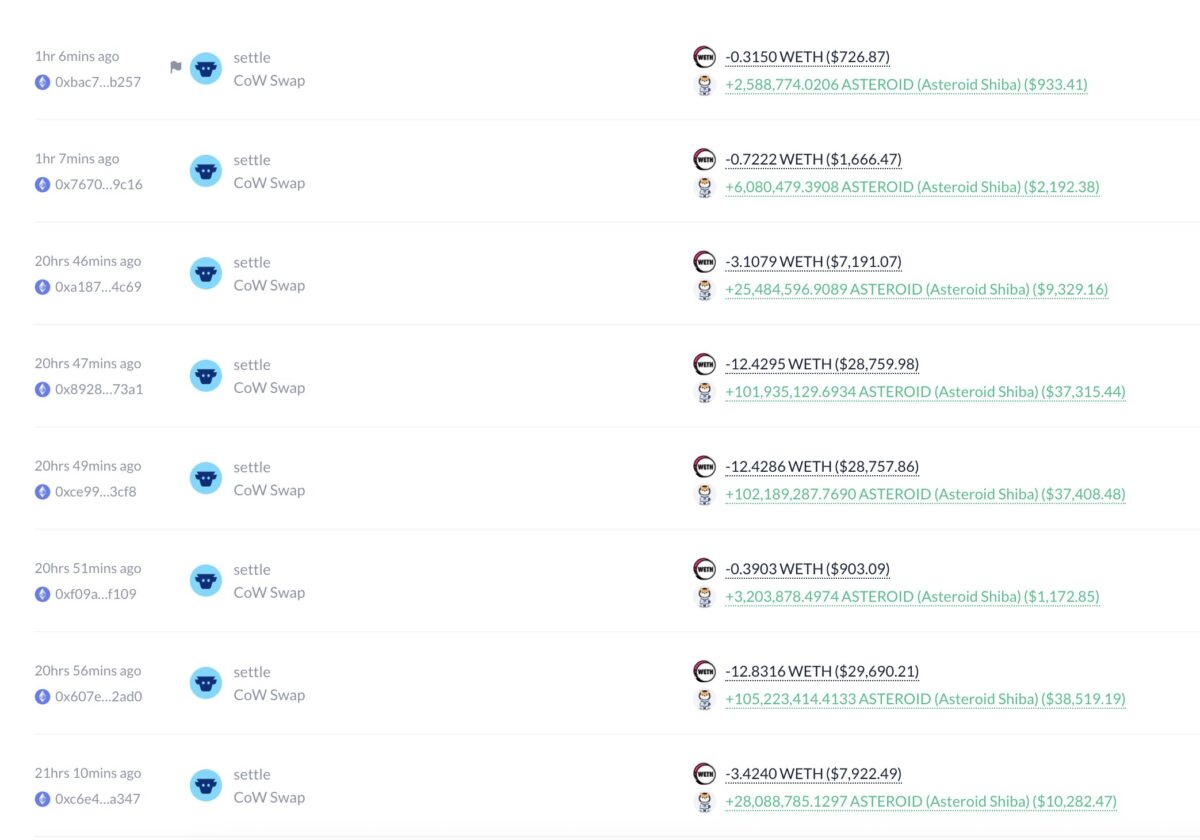
This move stood out because it is not passive accumulation.
It reflects a deliberate shift from a large-cap asset into a micro-cap, which signals a higher risk appetite and a search for outsized returns.
This concentration affects price behavior.
In a thin market, sustained buying can push prices higher faster than usual. However, the same structure increases fragility, as exits can reverse gains just as quickly.
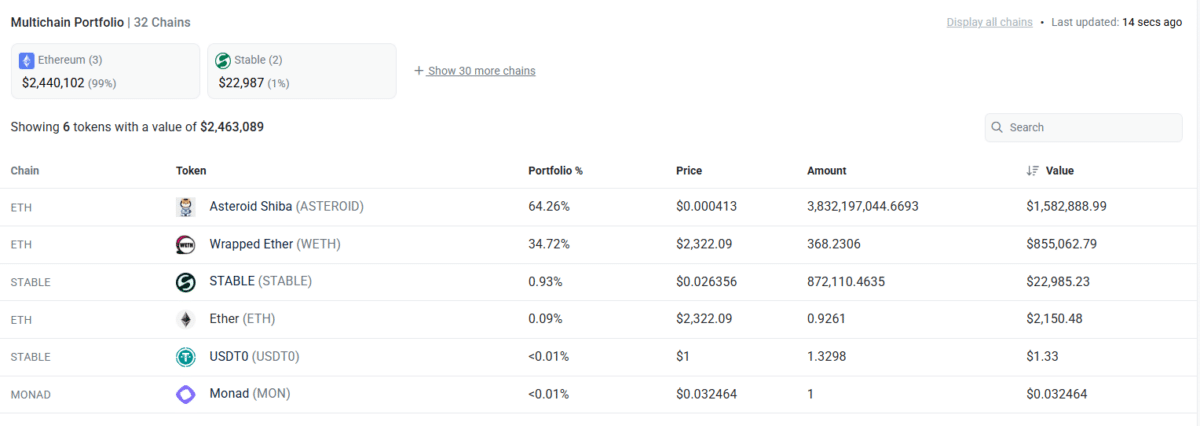
The remaining 368 Ethereum [$ETH] adds uncertainty. It suggests the whale may continue accumulating, which extends upward pressure, yet it also leaves room for a staged exit.
This implies the market may see short-term momentum, while participants face higher volatility and timing risk.
Thin liquidity amplifies price swings
As the whale rotation directs over $1 million from $ETH into Asteroid Shiba, the price begins to react sharply, which signals a liquidity-driven move. This shift happens as capital seeks higher upside, moving from large-cap stability into a thin, high-risk market.
The structure then shapes the reaction.
With only about $7.6 million in liquidity against a $165 million valuation, depth remains limited. As volume rises near $88 million, flows begin to dominate price, which pushes rapid gains through shallow pools.
This buildup creates momentum, yet it lacks broad participation. As a result, the price reflects concentrated demand rather than sustained market interest.
With roughly 22,000 holders, control stays narrow, which implies participants face higher volatility, where gains depend on continued inflows and remain vulnerable to quick reversals.
Momentum and liquidity trap risk
At the time of writing, Asteroid Shiba had rallied by over 15% in 24 hours. This rally reflected reflexive momentum, where an initial large buy triggered rapid price acceleration and drew market attention.
As visibility increased, retail FOMO followed, with traders rushing in to capture short-term gains rather than assess fundamentals.
This reaction builds through social amplification, where rising discussion pulls in momentum traders and reinforces the uptrend. As more participants enter, demand feeds on itself, which pushes prices beyond sustainable levels.
However, this same structure creates a liquidity trap.
With a small holder base and thin depth, buying pressure becomes fragile once it slows. As momentum fades, a large holder can distribute strength, which turns late entrants into exit liquidity.
This implies sharp reversals, where thin liquidity amplifies downside as selling pressure quickly overwhelms limited demand.
Final Summary
- Asteroid Shiba rally reflects whale-driven liquidity concentration, where thin depth amplifies gains but leaves price highly sensitive to sudden capital shifts.
- ASTEROID’s momentum risks a liquidity trap, where fading demand can turn late buyers into exit liquidity and trigger sharp reversals.