By cryptoadmin
 Yes, you read that right. A year after hitting a record high above $126,000 on Oct. 6, 2025, bitcoin is down just 32%, at $85,453.
In traditional markets, a drop that size would count as a crash. For bitcoin, that's a far gentler slide than in past bear markets.
Exactly a year after the 2013 peak, bitcoin was down 69.7%. Similarly, it was down 82.3% following the December 2017 top. A year after the November 2021 high, it was down 74.6%, according to CoinDesk calculations.
This shallower decline isn’t limited to the one-year anniversary. The bear market itself has been milder. At its lowest, just below $59,000 on June 30, bitcoin was down more than 53% from its peak. Past bear markets saw prices plummet 77% to 85% from record highs.
Essentially, two things have changed. The bear market has been shallower, and its worst point arrived earlier. In previous cycles, the trough often came around the one-year mark or later; this time, it came after about nine months, and the subsequent recovery has been fast.
“The most notable changes are the significantly shortened duration of the drawdown and the reduced time spent at the bottom," Tim Sun, senior researcher at HashKey Group, told CoinDesk.
Market participants changed
The main reason previous bear markets saw prices fall much lower and for longer is who drove the preceding bull runs. Retail traders and their use of leverage often fueled those rallies, which frequently ended in crashes marked by fund blowups and exchange failures, as seen in 2022.
The 2023–25 uptrend, by contrast, was driven by institutional inflows through regulated investment vehicles such as ETFs, while the subsequent downturn reflected a macro-led reversal of those flows.
"While previous cycles were driven primarily by retail investors and leverage, buyers in this current cycle increasingly stem from outside the crypto market, including ETFs, asset management giants, family offices, and even corporations. This growing demand for external asset allocation is the core driving force behind these shifts," Sun said.
The recent downturn was not entirely driven by "black swan" events, according to Sun; rather, it was largely caused by capital outflows resulting from changes in the external macroeconomic environment and asset allocation landscape.
"Consequently, despite undergoing significant adjustments, the market did not trigger the persistent negative feedback loops seen in the past," he noted.
Bitcoin NewsETFsTechnical Analysis  Latest Crypto News
- 1 U.S. scraps proposed $10,000 reporting rule for for crypto sent to private wallets
- 2 Ethereum’s Glamsterdam test gets last-minute fix before major capacity jump
- 3 Bitcoin keeps getting rejected at $87,000 as stocks hover near records
- 4 Solana Foundation unveils a program to settle institutional trades in seconds. JPMorgan gave input
- 5 Crypto's campaign arm, Fairshake, sets lists of U.S. House favorites it'll spend on
- 6 More than 60 U.S. stocks including Nvidia and Tesla are headed onchain. Here’s how it works
- 7 U.S. CFTC joins SEC in proposing crypto regulations, though spot-market gap lingers
- 8 Stripe to expand stablecoin cards to over 100 countries by the end of the year
- 9 An XRP treasury SPAC surges nearly 300% ahead of Evernorth merger
- 10 SEC approves a 3x fix for bitcoin and ether traders who miss the wild swings
 Latest Research
The Definitive Stablecoin Landscape Series: Asia Pacific

The Definitive Stablecoin Landscape Series: Asia Pacific
As stablecoins move into regulated finance, APAC is becoming a key proving ground. This report maps the region’s rules, use cases, and $RLUSD’s role.
By CoinDesk Research Sep 15, 2026 Commissioned byRipple
As stablecoins move into regulated finance, APAC is becoming a key proving ground. This report maps the region’s rules, use cases, and $RLUSD’s role.
Why it matters:
As stablecoins move into regulated finance, APAC is becoming a key proving ground. This report maps the region’s rules, use cases, and $RLUSD’s role.
View Full Report More From Markets 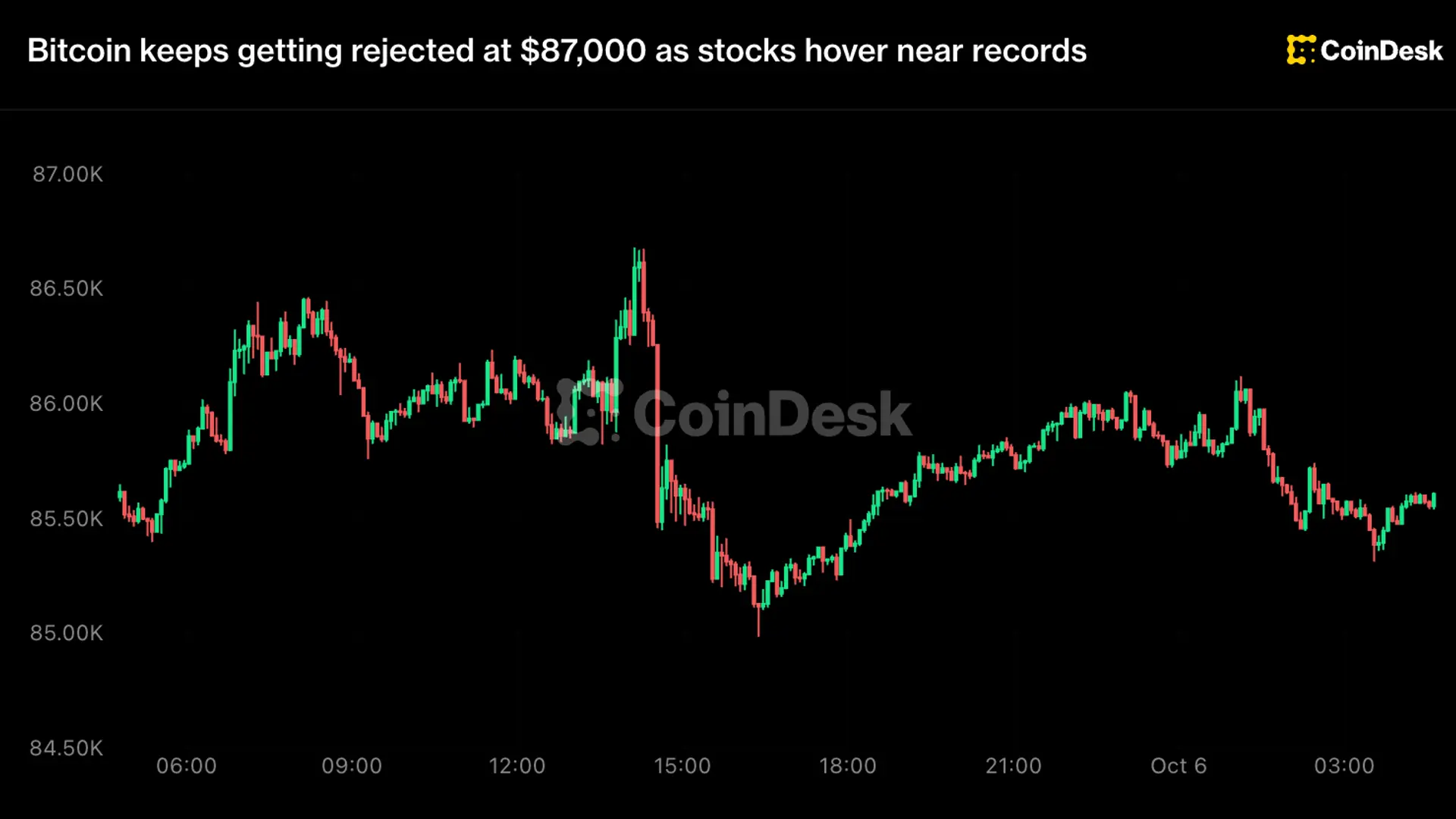
Bitcoin keeps getting rejected at $87,000 as stocks hover near records

Solana Foundation unveils a program to settle institutional trades in seconds. JPMorgan gave input