 By cryptoadmin
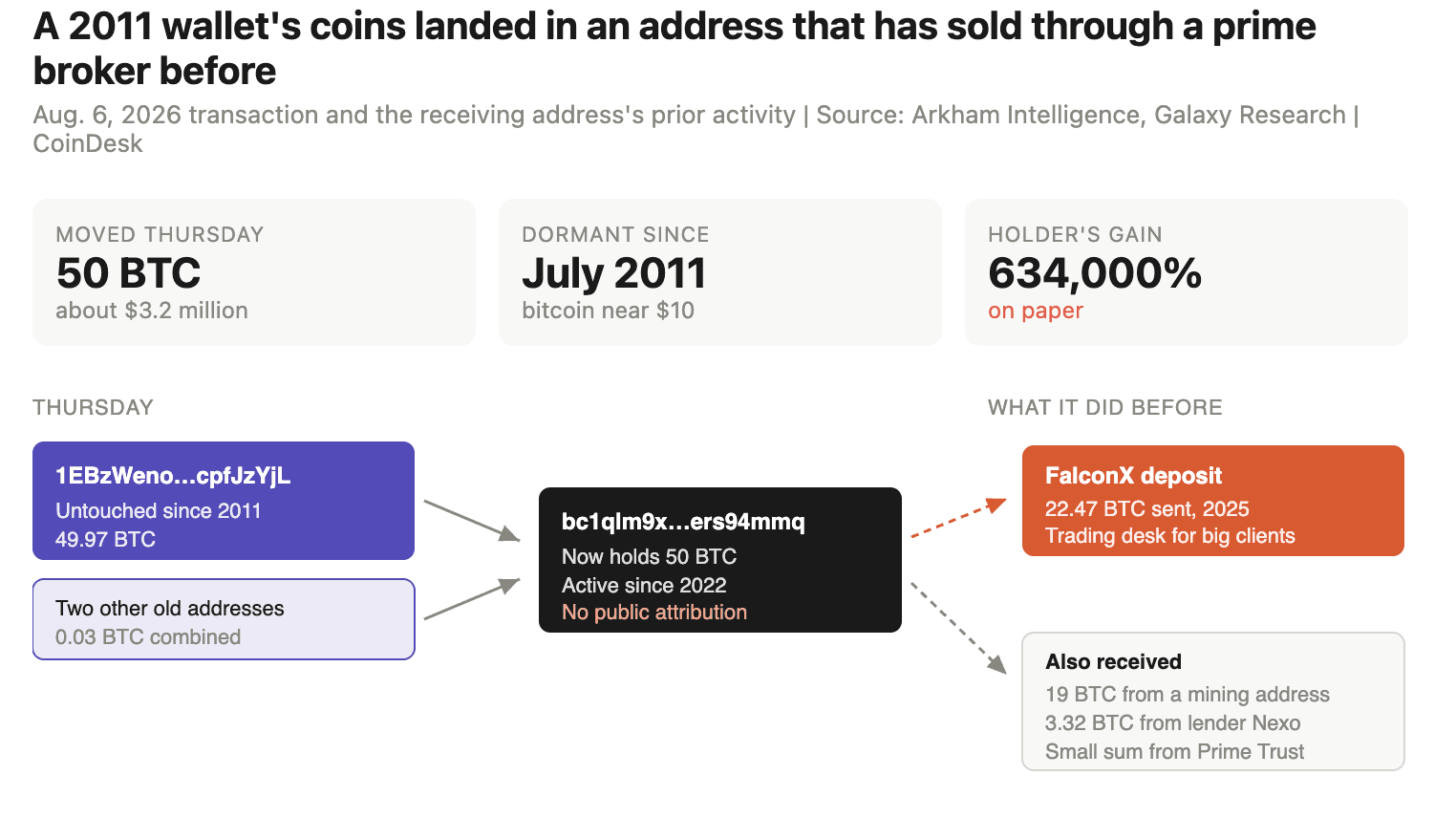
 A bitcoin wallet that had been dormant since 2011 moved nearly 50 $BTC worth about $3.2 million on Thursday, shifting the coins to an address with a history of sending bitcoin to institutional crypto brokerage FalconX.
The wallet received the coins on July 16, 2011, when bitcoin traded around $10, and had not spent them since, according to Galaxy Research. The 49.97 $BTC position is now worth roughly $3.2 million after surviving more than a decade of bitcoin booms, crashes and exchange failures.
The transaction, included in block 961331 at 20:14 UTC on Aug. 6, combined four inputs from the dormant address totaling 49.97 $BTC with two smaller inputs from other addresses. Exactly 50 $BTC was sent to a SegWit address, while a second output received about 0.00116 $BTC after fees.
SegWit is a newer Bitcoin address format that makes transactions more space-efficient and generally cheaper to send. Addresses beginning with bc1 use it.
The destination is not a fresh wallet, however. Arkham data show the address has been active for several years and previously sent 6.336 $BTC and 16.131 $BTC to addresses the analytics platform labels as FalconX deposits.
It has also received funds from wallets Arkham labels as a Nexo hot wallet and Prime Trust custody.
The newly arrived 50 $BTC remained in the address as of Friday morning. That means there is no on-chain evidence that the dormant coins themselves have been sent to FalconX, another exchange or sold.
Dormant wallets from bitcoin's earliest years tend to draw attention when they move because their owners accumulated coins when the asset was worth a fraction of today's price.
While movement alone gives little indication of what the holder plans to do next, and transfers can reflect anything from wallet upgrades and custody changes to preparations for a sale.
The movements come on the back of one of the worst cold-wallet exploits to hit Bitcoin in years, a reminder that coins can sit safely for more than a decade and still become vulnerable when the software protecting their keys fails.
Coinkite, maker of the Coldcard hardware wallet, urged users on Tuesday to move funds after disclosing a flaw in firmware dating to 2021 that could expose keys generated by affected devices. Attackers have swept as much as $114 million from vulnerable wallets since July 30, according to the company, in four waves of thefts.