 By cryptoadmin
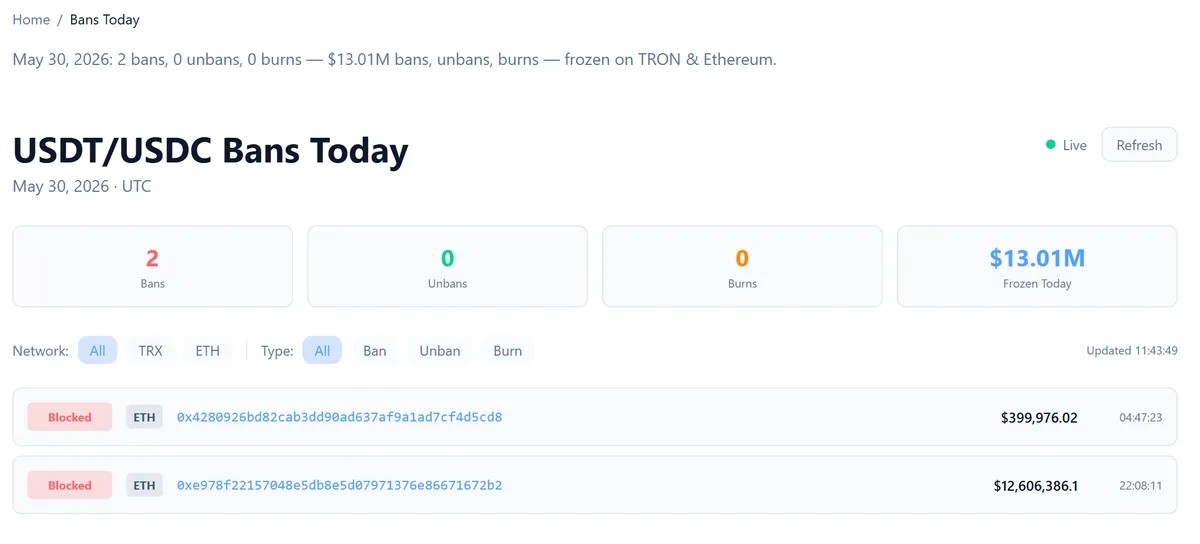
 Circle blacklisted Zama’s confidential $USDC contract on Ethereum on May 30. The blacklist freezes roughly $12.6 million held in a cUSDC token contract.
The freeze prevents holders of confidential $USDC (cUSDC) from redeeming the tokens for standard $USDC. The action raises fresh questions about issuer control over privacy-focused Decentralized Finance (DeFi) protocols.
Circle Blacklist Halts cUSDC Redemptions
Circle, the issuer of $USDC, maintains a built-in blacklist on the $USDC smart contract. Authorized Circle accounts add addresses, and blacklisted addresses cannot send or receive the stablecoin.
The frozen contract is an ERC-1967 proxy that holds $USDC on behalf of cUSDC token holders. Zama’s privacy protocol uses fully homomorphic encryption (FHE) to conceal balances and transfer amounts on public chains.
Follow us on X to get the latest news as it happens
Circle has not publicly explained the decision.
Past freezes have followed sanctions orders, court directives, or suspected illicit activity. The company blacklisted Tornado Cash-linked $USDC in 2022 after the U.S. Treasury sanctioned the mixer.
ZachXBT Links Freeze to Overnight Finance
On-chain investigator ZachXBT traced the underlying funds to a wallet, which deposited 12.4 million $USDC into Zama on May 11. The wallet appears to belong to Overnight Finance.
Update from ZachXBT.
What does this mean for privacy protocols? pic.twitter.com/1nAfXGnCoM— wale.moca 🐳 (@waleswoosh) May 30, 2026
Overnight Finance recently held a Snapshot governance vote to distribute treasury funds after holders alleged the team was preparing to rug pull. The dispute may have triggered the freeze.
Regardless, it’s precedent-setting to unilaterally freeze the contracts or addresses of a protocol where funds have been commingled with Zama users.
The commingling means innocent cUSDC holders may be locked out alongside any targeted address.
Stablecoin Control Returns to Focus
The freeze exposes a recurring tension between privacy protocols and fiat-backed stablecoins. Circle retains unilateral power to freeze funds despite its decentralized infrastructure.
Critics have long warned that centralized issuers create chokepoints. The debate intensified this year after Circle floated reversible $USDC plans that would allow transaction rollbacks under certain conditions.
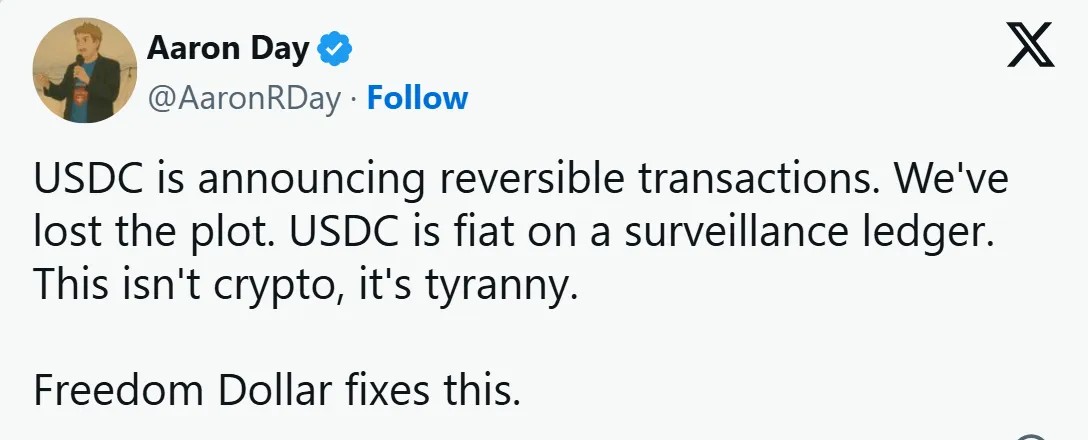
Similar concerns surround Coinbase’s ability to blacklist staked Ethereum through its smart contracts.
Holders of cUSDC have no clear path to recover their funds while the freeze remains in place.
Zama and Circle have yet to issue public statements addressing the affected users.
Circle could reverse the action or provide justification, with the decision expected to shape how privacy projects evaluate building atop centrally issued stablecoins.
The post Circle Freezes $12.6 Million in Confidential $USDC, Exposing Surveillance Risks appeared first on BeInCrypto.