 By cryptoadmin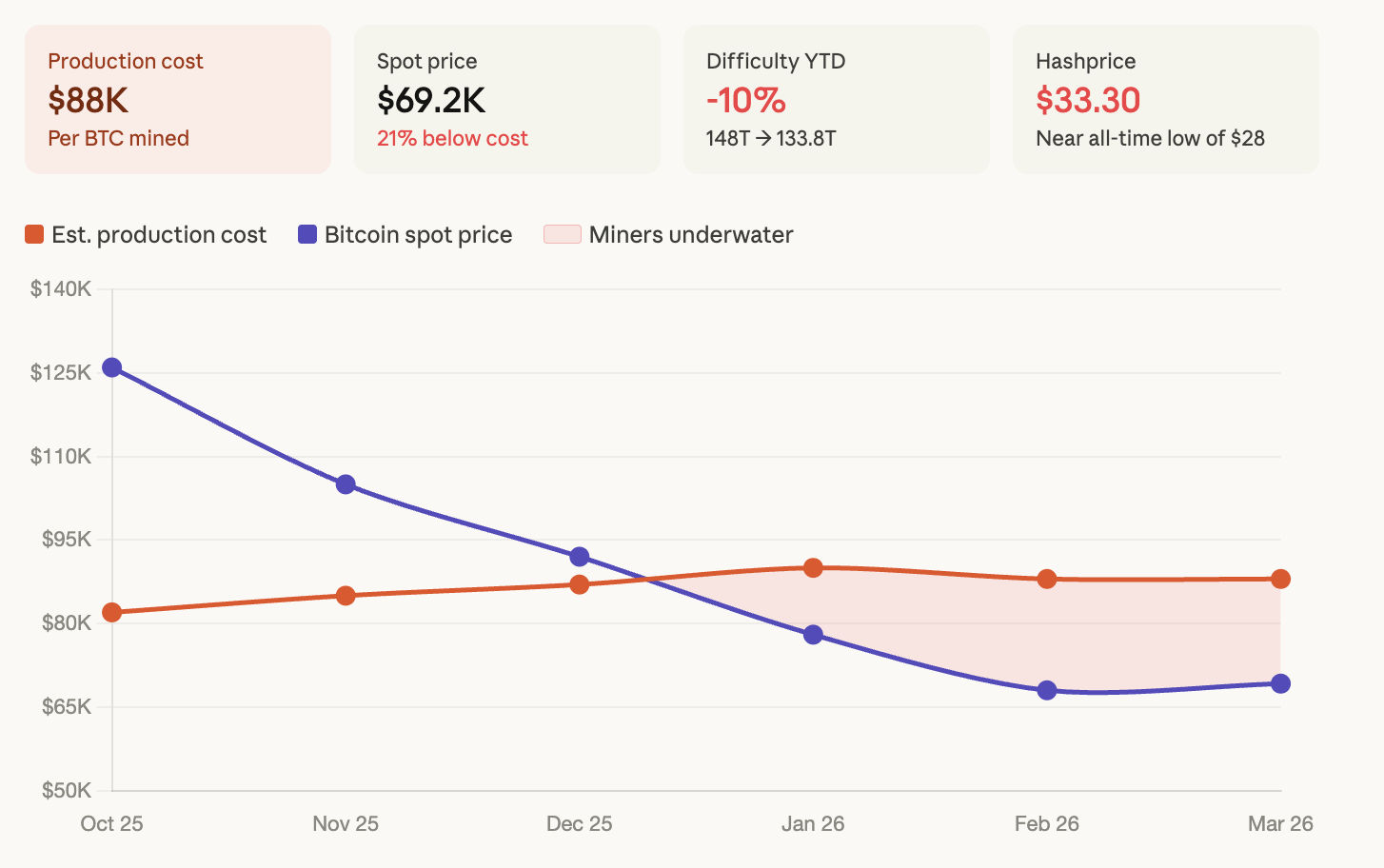
The math has turned against bitcoin miners, and the war is making it worse every week.
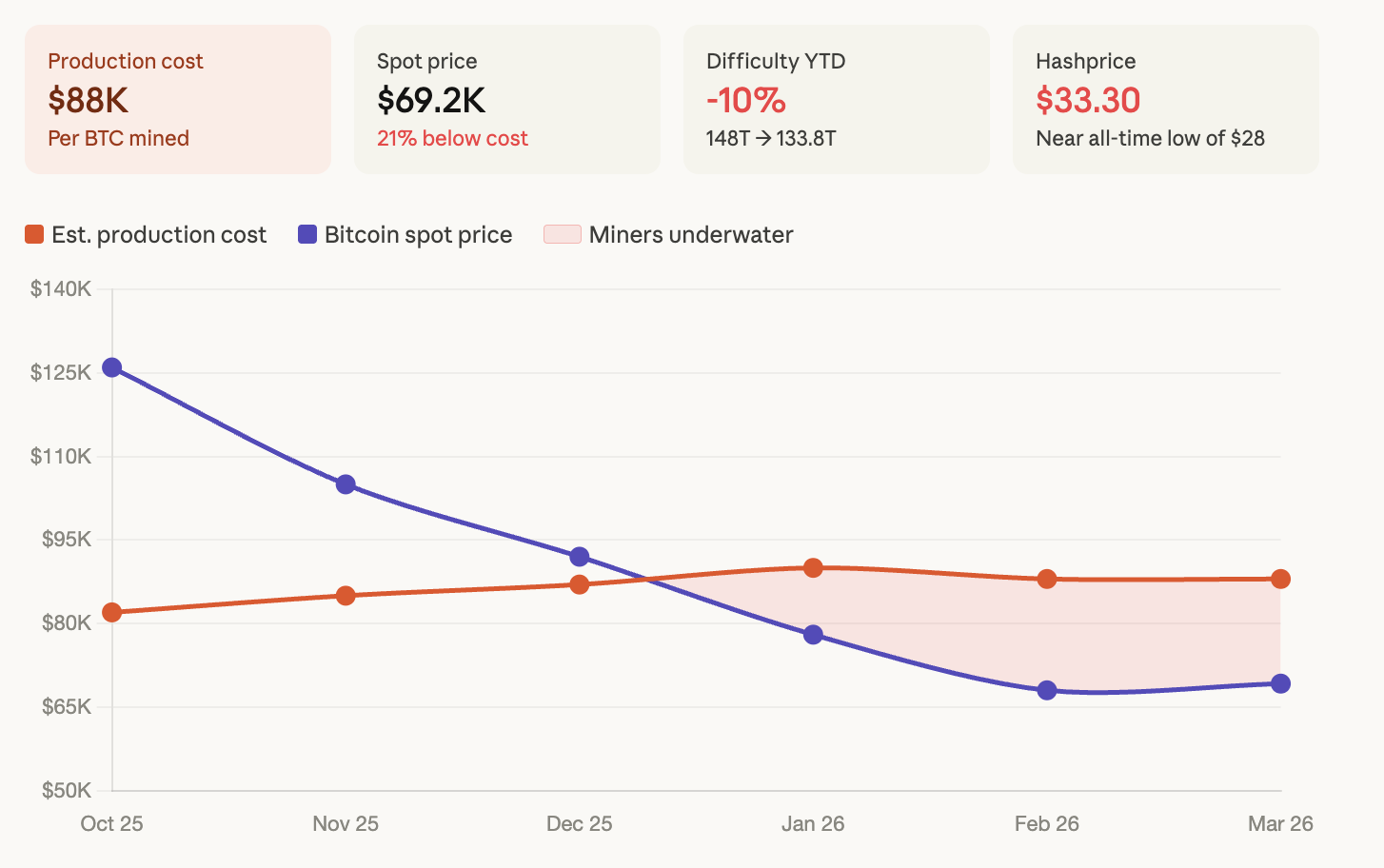
Checkonchain's difficulty regression model, which estimates average production costs based on network difficulty and energy inputs, pegged the figure at $88,000 per bitcoin as of March 13.
Bitcoin is trading at $69,200 as on Sunday morning, creating a gap of nearly $19,000 per coin and meaning the average miner is operating at a 21% loss on every block produced.
The cost squeeze has been building since October's crash took bitcoin from $126,000 to below $70,000, but the Iran war accelerated it. Oil above $100 feeds directly into electricity costs for mining operations, particularly the estimated 8-10% of global hashrate operating in energy markets sensitive to Middle Eastern supply.
The Strait of Hormuz, which handles roughly 20% of the world's oil and gas flows, remains effectively closed to most commercial traffic. And Trump's 48-hour ultimatum on Saturday threatening to attack Iran's power plants added a new layer of risk for miners.
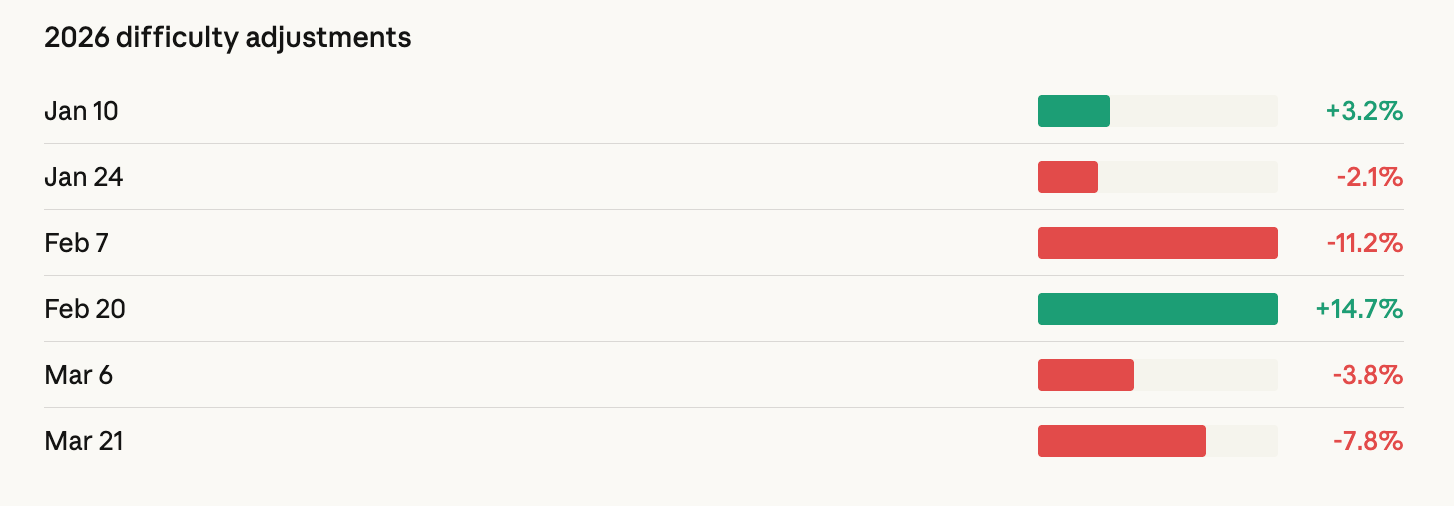
The network is already showing the stress. Difficulty dropped 7.76% on Saturday to 133.79 trillion, the second-largest negative adjustment of 2026 after February's 11.16% plunge during Winter Storm Fern. Difficulty is now nearly 10% below where it started the year and far below November 2025's all-time high near 155 trillion.
The hashrate has retreated to roughly 920 EH/s, well below the record 1 zetahash level reached in 2025. Average block times during the last epoch stretched to 12 minutes and 36 seconds, well above the 10-minute target.
Hashprice, the metric tracking expected miner revenue per unit of computing power, is hovering around $33.30 per petahash per second per day according to Luxor's Hashrate Index. That's near breakeven for most hardware and not far from the all-time low of $28 hit on Feb. 23.
When miners can't cover costs, they sell bitcoin to fund operations. That selling adds supply pressure to a market already dealing with 43% of total supply sitting at a loss, whales distributing into rallies, and leveraged positioning dominating price action. Mining economics aren't just a sector story. They're a market structure story.
The publicly traded miners have been adapting by diversifying into AI and high-performance computing, which offer more predictable revenue than mining bitcoin at a loss. Marathon Digital, Cipher Mining, and others have been building out data center capacity alongside their mining operations.
The next difficulty adjustment is projected for early April and is expected to decline further according to CoinWarz data. If bitcoin stays below $88,000, and there's no sign of a return to that level in the near term, the miner exodus continues and difficulty keeps falling.
The network self-corrects by design, making it cheaper to mine as participants leave. But the period between when costs exceed revenue and when difficulty adjusts low enough to restore profitability is where the damage happens, both to miners and to the spot market absorbing their forced selling.